Cardus Edição 57, 01-06-2019
The Poilão/Kapok Tree – Ceiba Pentandra
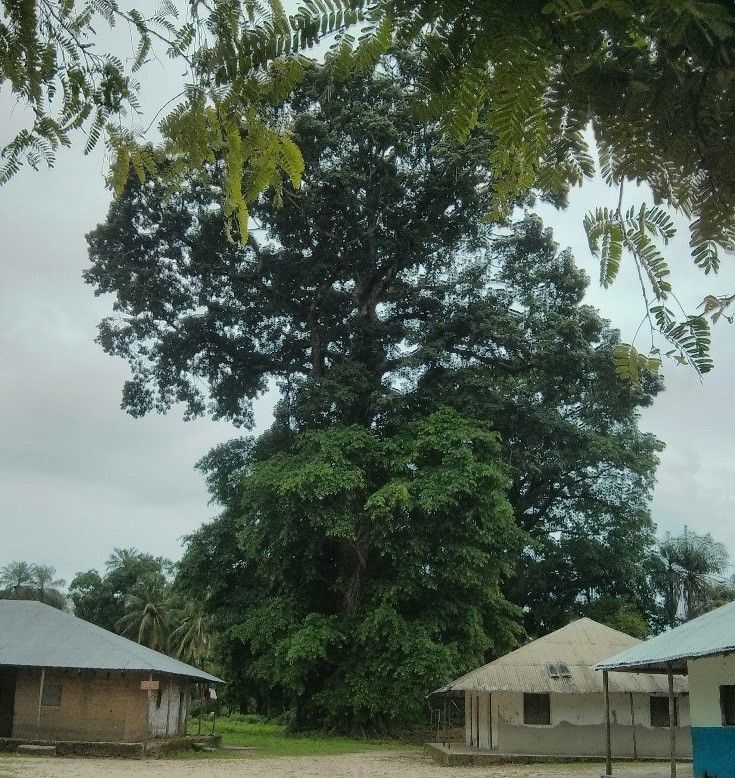
I have always admired big trees. The Douglas firs of British Columbia, Canada were the largest I had seen, until I saw this tree – in Portuguese, a poilão, or in English, a kapok tree - in the village of Campeane, in the south of Guinea Bissau. A mature poilão/kapok is truly a magnificent and impressive tree, both in height and width.
This region of Guinea Bissau is located in a tropical rainforest, which supports the growth of poilões/kapoks. Many can be seen in the Cacine sector (where Campeane is located) and in the Cantanhez National Park, just across the Cacine River. A mature poilão/kapok will be easily 50 m in height, and can grow up to 70 m. The trees flower during the dry season. They produce seed pods that are covered in a fluffy whiteish/yellowish fibre. The fibre is very light, buoyant and resistant to water. The wood of the tree has the same characteristics.
The tree is used by the local population. Traditional boats are hewn from the trunks, the flowers are eaten by people and animals, soap can be made from the seeds and natural medicines are made from the bark. The fibres are used as stuffing for mattresses and pillows and can also be used for weaving. In the past, the fibre was used as filling in life jackets until synthetic materials took over.
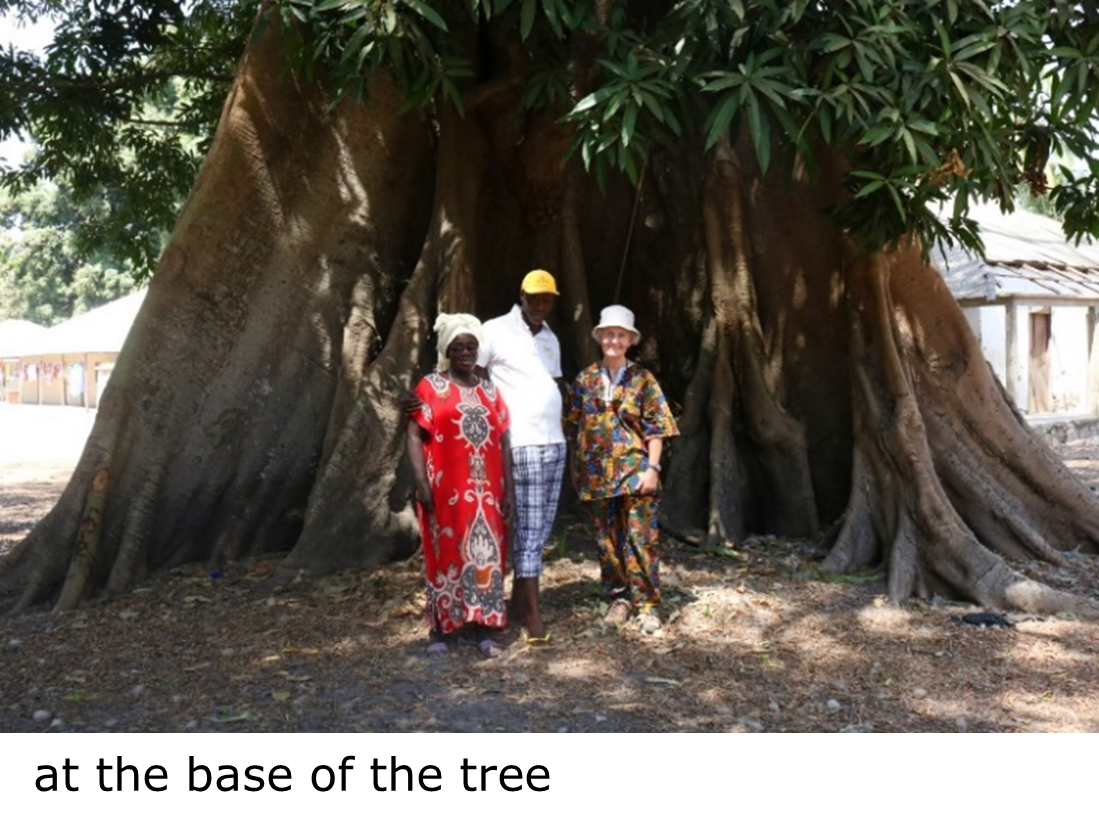
It is not surprising that some of these trees are considered sacred and used by practitioners of animist traditions to offer prayers and offerings and to invoke the spirits for either good or bad.
By Helen Whitson
Edmonton, Alberta, Canada
Written in Cacine – May/2019